
How to analyze YouTube channel performance
The information presented here is for entertainment purposes only. No rights can be derived from the information presented here. You understand, acknowledge and accept that the information presented here is just our opinion and that your opinion can be different from ours. You should not take any kind of advice from our opinion and all of the information presented here, because all the information and opinions presented here are just for entertainment purposes only. This site contains links to websites of third parties. You can assume that any link is an affiliate link. If you make a purchase through our links we are compensated at no cost to you. You can read our affiliate disclosure in our privacy policy. We accept no liability or responsibility for third-party websites’ content, use, or availability. The use of such links is at your own risk. We have not further assessed the information on such websites for accuracy, reasonableness, timeliness, or completeness. You can not derive any rights from the information mentioned here. By consuming this content you acknowledge and accept that.
What Are YouTube Analytics and How Do They Work?
YouTube Analytics is a comprehensive data tracking system that provides detailed insights into how our videos and channel are performing on the platform. When we upload content to YouTube, the platform automatically collects data about viewer behavior, engagement patterns, and performance metrics, then presents this information through an intuitive dashboard that helps us understand our audience and improve our content strategy.
- Real-time data collection: YouTube continuously monitors every interaction with our videos, from views and clicks to watch time and subscriber changes
- Audience behavior tracking: We can see exactly how viewers discover our content, whether through search, suggested videos, or external sources
- Performance measurement: The system tracks key performance indicators like view duration, engagement rates, and revenue generation
- Demographic insights: We get detailed information about our audience’s age, gender, geographic location, and viewing preferences
- Content optimization tools: YouTube provides recommendations and insights to help us improve our video performance and reach
Understanding the YouTube Analytics Tool
The YouTube Analytics tool is our command center for monitoring channel performance, accessible through YouTube Studio where all our content management happens. We can dive deep into specific metrics, compare different time periods, and export data for further analysis, making it an essential tool for any serious content creator looking to grow their channel.
- Dashboard overview: We get a quick snapshot of our channel’s overall performance with key metrics displayed prominently
- Detailed reporting sections: The tool is organized into different tabs covering reach, engagement, audience, and revenue analytics
- Customizable date ranges: We can analyze performance over specific periods, from the last 28 days to our entire channel history
- Video-specific analysis: Each individual video has its own analytics page showing detailed performance data
- Comparison features: We can compare the performance of different videos or time periods side by side
- Mobile accessibility: The YouTube Studio mobile app gives us access to analytics on the go
Key Metrics in YouTube Channel Analytics
YouTube Analytics tracks dozens of important metrics, but the most crucial ones we focus on include watch time, views, subscriber growth, and engagement rates. These core metrics give us a comprehensive picture of how well our content resonates with viewers and how effectively we’re building our audience over time.
- Watch time and average view duration: Shows us how long viewers stay engaged with our content and which parts keep their attention
- Views and impressions: Tracks how many times our videos are watched and how often they appear in search results or recommendations
- Subscriber metrics: Monitors how many new subscribers we gain or lose and which videos drive the most subscriptions
- Engagement rates: Measures likes, comments, shares, and click-through rates to gauge audience interaction
- Revenue analytics: For monetized channels, we can track ad revenue, channel memberships, and Super Chat earnings
- Traffic sources: Shows us where our viewers are discovering our content, whether through YouTube search, external websites, or suggested videos
- Demographics data: Provides insights into our audience’s age, gender, and geographic distribution
How to Access YouTube Analytics
We can access YouTube Analytics by logging into our YouTube account and navigating to YouTube Studio, where the Analytics tab is prominently displayed in the left sidebar. Once we click on Analytics, we’re taken to a comprehensive dashboard that shows our channel’s performance data in an organized, easy-to-navigate format.
- YouTube Studio access: Sign in to YouTube, click on your profile picture, and select “YouTube Studio” from the dropdown menu
- Analytics tab navigation: In YouTube Studio, click on “Analytics” in the left sidebar to open the main analytics dashboard
- Mobile app access: Download the YouTube Studio mobile app to check analytics anywhere using your smartphone or tablet
- Video-specific analytics: We can access individual video analytics by going to our content library and clicking the analytics icon next to each video
- Real-time data viewing: The “Real-time” tab shows us live data about views and subscriber changes as they happen
- Export options: We can download our analytics data as CSV files for deeper analysis in spreadsheet applications
What Metrics Should You Track for Your YouTube Channel?
Tracking the right metrics is crucial for understanding our channel’s performance and making data-driven decisions to improve our content strategy. We should focus on a balanced mix of growth indicators, engagement signals, and audience behavior metrics rather than getting overwhelmed by every single data point available in YouTube Analytics.
- Core performance indicators: We prioritize watch time, subscriber growth, and click-through rates as the most important metrics for channel success
- Audience engagement signals: Likes, comments, shares, and average view duration tell us how well our content resonates with viewers
- Discovery and reach metrics: Impressions, click-through rates, and traffic sources show us how effectively our content is being found and promoted
- Revenue-related tracking: For monetized channels, we monitor RPM (revenue per mille), CPM, and total estimated revenue
- Audience retention patterns: We analyze where viewers drop off in our videos to identify content improvements
- Demographic insights: Understanding our audience’s age, location, and viewing habits helps us create more targeted content
- Competitive benchmarking: We compare our metrics against similar channels in our niche to gauge relative performance
Subscriber Growth and Retention
Subscriber growth shows us how effectively we’re building a loyal audience base, while subscriber retention indicates whether our existing audience remains engaged with our content over time. We track both the rate of new subscribers gained and any subscriber losses to understand the overall health of our channel’s community-building efforts.
- Net subscriber growth: We monitor the difference between subscribers gained and lost to see our true audience expansion
- Subscriber acquisition sources: YouTube Analytics shows us which videos and traffic sources bring in the most new subscribers
- Subscriber activity levels: We track what percentage of our subscribers actually watch our new videos when they’re published
- Subscription conversion rates: We measure how many viewers subscribe after watching our content, indicating content quality and audience appeal
- Subscriber demographics: Understanding who our subscribers are helps us create content that better serves our core audience
- Notification engagement: We monitor how many subscribers have notifications turned on and actually click when we publish new content
- Long-term retention patterns: We analyze subscriber behavior over months to identify trends in audience loyalty and engagement
Watch Time and Average View Duration
Watch time is YouTube’s most important ranking factor, representing the total minutes viewers spend watching our content, while average view duration shows us how engaging our individual videos are. We use these metrics together to understand both our overall channel performance and the effectiveness of specific pieces of content in holding viewer attention.
- Total watch time tracking: We monitor our cumulative watch hours across all videos to understand our channel’s overall viewer engagement
- Average view duration analysis: This metric shows us the typical length of time viewers spend watching each video before clicking away
- Audience retention graphs: We examine the moment-by-moment retention data to identify exactly where viewers lose interest in our videos
- Relative performance comparison: We compare watch time metrics across different video types and topics to identify our most engaging content formats
- Session duration impact: We track how our videos contribute to overall YouTube session time, which affects algorithmic promotion
- Device-specific viewing patterns: We analyze how watch time differs between mobile, desktop, and TV viewers to optimize our content accordingly
- Seasonal and trending patterns: We monitor how watch time fluctuates over different periods to identify optimal posting schedules and content timing
Engagement Metrics: Likes, Comments, and Shares
Engagement metrics like likes, comments, and shares are strong indicators of how much our audience connects with and values our content beyond just passive viewing. We track these interactions because they signal to YouTube’s algorithm that our content is worth promoting, while also providing valuable feedback and community-building opportunities.
- Like-to-view ratios: We calculate the percentage of viewers who like our videos to gauge overall audience satisfaction and content quality
- Comment engagement rates: We monitor not just comment quantity but also the quality of discussions and our response rates to build community
- Share and save metrics: These actions indicate viewers find our content valuable enough to recommend to others or reference later
- Engagement velocity: We track how quickly likes and comments accumulate after publishing to understand initial audience response
- Comment sentiment analysis: We manually review comments to understand viewer feedback and identify areas for content improvement
- Cross-platform sharing: We monitor how often our YouTube content gets shared on social media platforms like Twitter, Facebook, and Instagram
- Engagement consistency: We compare engagement rates across different video types and topics to identify what resonates most with our audience
How to Use YouTube Studio for Channel Performance Analysis?
YouTube Studio is our primary control center for analyzing channel performance, offering comprehensive tools and dashboards that help us understand every aspect of our content’s success. We use this platform daily to monitor key metrics, identify trends, and make informed decisions about our content strategy based on real data rather than guesswork.
- Comprehensive dashboard overview: We access all our channels’ vital statistics in one centralized location with customizable date ranges and metric comparisons
- Real-time performance monitoring: We can track live metrics, including current views, subscriber changes, and revenue, as they happen throughout the day
- Advanced filtering options: We segment our data by video type, upload date, performance level, and audience demographics to gain deeper insights
- Content optimization tools: YouTube Studio provides specific recommendations for improving video titles, descriptions, thumbnails, and tags based on performance data
- Audience behavior analysis: We examine viewer retention graphs, traffic sources, and engagement patterns to understand how our audience discovers and interacts with our content
- Revenue tracking capabilities: For monetized channels, we monitor ad performance, channel memberships, Super Chat earnings, and overall monetization efficiency
- Competitive benchmarking features: We compare our performance against similar channels and industry averages to identify growth opportunities
Navigating the YouTube Studio App
The YouTube Studio app provides us with a streamlined mobile experience for monitoring our channel’s performance while we’re away from our computers. We use the intuitive interface to quickly check key metrics, respond to comments, and make urgent content adjustments without needing access to a desktop computer.
- Main dashboard accessibility: We open the app to immediately see our channel’s overview with recent performance highlights and trending metrics displayed prominently
- Quick metric snapshots: The home screen shows us essential data like recent views, subscriber changes, and top-performing videos at a glance
- Mobile-optimized analytics: We can dive into detailed performance data for individual videos with touch-friendly charts and graphs designed for smartphone screens
- Comment management tools: We respond to viewer comments, moderate discussions, and engage with our community directly through the mobile interface
- Content scheduling features: We can upload videos, set publish times, and make basic edits to video metadata while on the go
- Real-time notifications: The app alerts us to significant channel events like viral video performance, subscriber milestones, or monetization updates
- Cross-device synchronization: All changes and analytics data sync seamlessly between our mobile app and desktop YouTube Studio experience
Interpreting Video Performance Insights
Understanding video performance insights helps us identify what content resonates most with our audience and why certain videos succeed while others underperform. We analyze multiple data points together rather than focusing on single metrics to get a complete picture of each video’s impact on our channel’s growth.
- View and impression analysis: We examine how many people see our video thumbnails versus how many actually click to watch, calculating our click-through rates for optimization
- Audience retention patterns: We study the retention graphs to identify exactly where viewers lose interest and adjust our content structure accordingly
- Traffic source breakdown: We analyze whether viewers find our videos through YouTube search, suggested videos, external websites, or direct links to understand discovery patterns
- Engagement rate calculations: We measure likes, comments, and shares relative to total views to gauge audience satisfaction and content quality
- Demographic performance: We review how different age groups, genders, and geographic regions respond to our content to tailor future videos
- Revenue per video tracking: For monetized content, we calculate which videos generate the most ad revenue and identify profitable content patterns
- Comparative performance analysis: We compare new videos against our historical averages and top performers to set realistic expectations and identify improvement opportunities
Utilizing YouTube Stats for Growth
YouTube statistics provide us with actionable insights that directly inform our content strategy and help us make decisions that accelerate channel growth. We use these stats not just to measure past performance but to predict what types of content will succeed in the future and how to optimize our publishing schedule.
- Growth trend identification: We analyze subscriber and view growth patterns over time to identify successful content themes and optimal posting frequencies
- Audience development insights: We study viewer behavior data to understand when our audience is most active and what content formats keep them engaged the longest
- Content performance optimization: We use stats to refine our video titles, thumbnails, and descriptions based on which elements drive the highest click-through rates
- Algorithm performance tracking: We monitor how YouTube’s recommendation system promotes our content and adjust our strategy to improve algorithmic visibility
- Revenue optimization strategies: We analyze which videos and content types generate the most ad revenue to focus our efforts on profitable content creation
- Seasonal and trending analysis: We identify patterns in our performance data that correspond to holidays, events, or trending topics to plan future content calendars
- Competitive positioning: We use our stats to understand our position within our niche and identify opportunities to differentiate our content from competitors
How to Analyze Video Performance Using YouTube Video Analytics?
YouTube video analytics provides us with granular data about each individual video’s performance, allowing us to understand exactly how viewers interact with our content from the moment they see our thumbnail until they finish watching. We use this detailed analysis to identify our most successful content patterns and replicate those elements in future videos to consistently improve our channel’s overall performance.
- Individual video deep-dive analysis: We examine each video’s unique performance metrics, including views, watch time, engagement rates, and revenue generation, to understand its specific impact
- Performance timeline tracking: We monitor how each video performs over different time periods, from the first 24 hours after publishing to long-term evergreen performance
- Audience behavior mapping: We analyze viewer flow patterns to see how people discover our videos, how long they stay engaged, and what actions they take afterward
- Content effectiveness measurement: We evaluate which video elements, like introductions, main content, and calls-to-action, perform best based on retention data
- Cross-video performance comparison: We identify our top and bottom performers to understand what content resonates most with our audience
- Optimization opportunity identification: We pinpoint specific areas where each video could be improved based on drop-off points and engagement patterns
- ROI calculation for video content: We measure the return on investment for each video by analyzing the time and resources spent versus the views, engagement, and revenue generated
Key Features of YouTube Video Analytics
YouTube video analytics offers us a comprehensive suite of tools that break down every aspect of our video’s performance into actionable insights. We navigate through multiple analytics sections to get a complete picture of how our content performs across different metrics and time periods.
- Overview dashboard summary: We get instant access to key performance indicators, including views, watch time, subscribers gained, and estimated revenue for each video
- Reach metrics analysis: We examine impressions, click-through rates, and traffic sources to understand how effectively our video gets discovered by potential viewers
- Engagement data breakdown: We analyze likes, dislikes, comments, shares, and subscriber conversions to gauge audience response and content quality
- Audience retention graphs: We study minute-by-minute viewer retention to identify exactly where audiences lose interest and which segments keep them most engaged
- Revenue performance tracking: For monetized videos, we monitor ad revenue, RPM, and CPM to understand the financial performance of our content
- Demographics and geography insights: We review who watches our videos by age, gender, and location to better understand our target audience
- Playback location data: We see where our videos are being watched, whether on YouTube, embedded on websites, or through mobile apps
Comparing Video Content Performance
Comparing video performance helps us identify patterns in our most and least successful content, enabling us to make data-driven decisions about future video topics and formats. We use side-by-side comparisons to understand what elements contribute to viral success and which factors might be limiting our reach.
- Top performer identification: We rank our videos by various metrics like views, watch time, and engagement to identify our most successful content themes and formats
- Content category analysis: We compare performance across different video types, such as tutorials, vlogs, reviews, or entertainment content, to focus on our strongest niches
- Publishing timing comparison: We analyze how videos perform when published on different days of the week and times of day to optimize our upload schedule
- Seasonal performance patterns: We compare video performance across different months and seasons to identify when our audience is most active and engaged
- Thumbnail and title effectiveness: We evaluate which visual and textual elements in our most successful videos drive higher click-through rates and initial engagement
- Length and format optimization: We compare how different video lengths and content structures affect retention rates and overall performance
- Audience overlap analysis: We examine which videos attract similar audiences and which ones bring in new viewer demographics to our channel
Optimizing Video Titles and Thumbnails for Better Metrics
Video titles and thumbnails are our first opportunity to capture viewer attention and convince them to click on our content, making them critical elements for improving our overall video performance metrics. We continuously test and refine these elements based on analytics data to maximize our click-through rates and initial viewer engagement.
- Click-through rate optimization: We analyze which title and thumbnail combinations generate the highest percentage of clicks from impressions and replicate successful elements
- A/B testing methodology: We experiment with different title formats, thumbnail styles, and visual elements to scientifically determine what resonates most with our audience
- Keyword performance analysis: We track which keywords in our titles drive the most search traffic and incorporate high-performing terms into future content
- Thumbnail visual element testing: We compare the performance of different thumbnail styles, including text overlays, facial expressions, color schemes, and composition layouts
- Title length and structure optimization: We analyze whether shorter, punchy titles or longer, descriptive titles perform better for our specific audience and content type
- Emotional appeal measurement: We test how different emotional triggers in titles and thumbnails affect engagement rates and audience retention
- Competitive thumbnail analysis: We study successful videos in our niche to identify trending visual elements and title formats that we can adapt for our own content
How Can You Optimize Your YouTube Strategy Based on Analytics?
Analytics data serves as our roadmap for strategic decision-making, helping us transform raw performance numbers into actionable improvements that directly impact our channel’s growth and audience engagement. We use this data-driven approach to eliminate guesswork from our content strategy and focus our efforts on what actually works for our specific audience and niche.
- Data-driven content planning: We analyze our top-performing videos to identify successful topics, formats, and styles that we can replicate and expand upon in future content
- Audience behavior optimization: We study viewer patterns to understand when our audience is most active, what content they prefer, and how they discover our videos
- Performance benchmarking: We set realistic goals based on our historical data and track progress against specific metrics like watch time, subscriber growth, and engagement rates
- Resource allocation efficiency: We focus our time and budget on content types and strategies that analytics show generate the best return on investment
- Algorithmic alignment: We adjust our content strategy to work with YouTube’s recommendation algorithm by optimizing for metrics that drive algorithmic promotion
- Competitive positioning: We use analytics insights to identify gaps in our niche and opportunities to differentiate our content from competitors
- Long-term strategic planning: We develop quarterly and annual content strategies based on trends and patterns identified through comprehensive analytics analysis
Using Insights to Improve Audience Retention
Audience retention is one of the most critical metrics we focus on because it directly influences how YouTube’s algorithm promotes our content to new viewers. We dive deep into retention graphs and viewer behavior data to understand exactly where we lose our audience’s attention and implement specific strategies to keep viewers engaged throughout our entire video.
- Retention graph analysis: We examine the minute-by-minute retention curves to identify specific moments where viewers drop off and adjust our content structure accordingly
- Hook optimization strategies: We analyze the first 15 seconds of our videos to ensure we’re capturing attention immediately and setting clear expectations for what viewers will gain
- Content pacing adjustments: We study retention patterns to determine optimal pacing for different video segments, ensuring we maintain engagement without rushing important information
- Strategic content placement: We position our most valuable or entertaining content at points where retention typically drops to re-engage viewers who might be considering leaving
- Call-to-action timing: We use retention data to place subscribe buttons, like reminders, and engagement prompts at moments when viewers are most engaged
- Format experimentation: We test different video structures, intro lengths, and content organization methods to find formats that maintain the highest retention rates
- Audience expectation management: We align our content delivery with what our retention data shows viewers expect, ensuring we meet their needs throughout the video
Strategies to Grow Your YouTube Channel
Channel growth requires a comprehensive approach that combines content optimization, audience development, and strategic promotion based on what our analytics reveal about successful growth patterns. We implement multiple growth strategies simultaneously while using analytics to measure their effectiveness and adjust our efforts accordingly.
- Content consistency optimization: We analyze our publishing schedule data to determine the optimal frequency and timing for uploads that maximize audience engagement and subscriber growth
- Niche authority building: We use analytics to identify our most successful content themes and double down on topics where we show strong performance and audience interest
- Cross-video promotion strategies: We analyze which videos successfully drive viewers to watch additional content and implement end screens, cards, and playlists more effectively
- Community engagement enhancement: We study comment patterns and engagement rates to develop strategies for building stronger relationships with our audience through meaningful interactions
- Collaboration opportunity identification: We use analytics to identify other creators whose audiences might align with ours for potential collaboration and cross-promotion opportunities
- SEO and discoverability improvement: We optimize our titles, descriptions, and tags based on search traffic data to improve our content’s visibility in YouTube search results
- Platform diversification: We use YouTube analytics to understand our audience demographics and preferences, then develop strategies for reaching them on other social media platforms
Adjusting Content Based on Viewer Behavior
Understanding viewer behavior patterns allows us to create content that naturally aligns with how our audience prefers to consume and interact with our videos. We continuously monitor behavioral data to refine our content approach and ensure we’re delivering exactly what our viewers want in the format they prefer.
- Content format optimization: We analyze which video formats (tutorials, vlogs, reviews, live streams) generate the highest engagement and focus our efforts on the most successful formats
- Video length adjustment: We study average view duration across different video lengths to find the optimal duration that maximizes both watch time and completion rates
- Topic selection refinement: We identify which subjects generate the most views, engagement, and subscriber growth to inform our content calendar and topic prioritization
- Audience preference adaptation: We analyze demographic data and viewing patterns to tailor our content style, language, and complexity to match our audience’s preferences
- Seasonal content planning: We use historical performance data to identify seasonal trends and plan content that aligns with when our audience is most active and engaged
- Interaction pattern optimization: We study how viewers engage with different types of calls-to-action and adjust our approach to maximize likes, comments, shares, and subscriptions
- Content series development: We analyze which videos successfully keep viewers watching additional content to develop series and playlists that increase overall channel watch time
What Are the Best Tools to Complement YouTube Analytics?
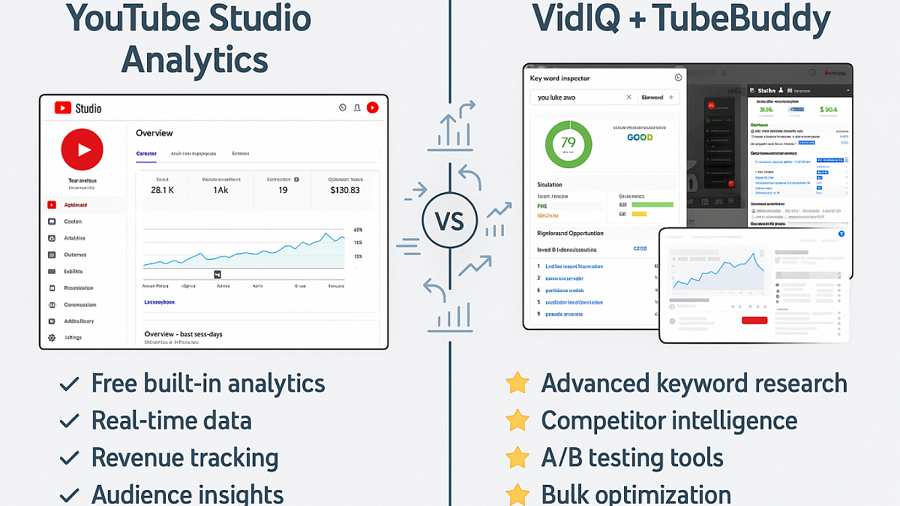
While YouTube’s native analytics provide comprehensive data about our channel performance, we can enhance our analysis capabilities by integrating third-party tools that offer additional insights and features not available in the standard platform. These complementary tools help us gain deeper competitive intelligence, advanced keyword research capabilities, and more sophisticated tracking options that elevate our overall YouTube strategy.
- Advanced keyword research tools: We use specialized platforms to discover high-traffic, low-competition keywords that YouTube Analytics doesn’t provide, helping us optimize our content for better discoverability
- Competitive analysis platforms: These tools allow us to analyze competitor performance, trending topics in our niche, and benchmark our metrics against similar channels
- Enhanced SEO optimization: We leverage tools that provide more detailed tag suggestions, title optimization recommendations, and thumbnail testing capabilities beyond what YouTube offers
- Social media integration: We connect our YouTube analytics with broader social media management platforms to understand our content’s performance across multiple channels
- Advanced scheduling and automation: These tools offer more sophisticated publishing schedules, bulk editing capabilities, and automated optimization features that save us time
- Revenue optimization platforms: We use specialized tools to maximize our monetization potential through better ad placement, sponsorship tracking, and revenue forecasting
- Audience engagement enhancement: Additional tools help us manage comments more effectively, track engagement across platforms, and build stronger community relationships
Introduction to VidIQ for YouTube Insights
VidIQ serves as our comprehensive YouTube optimization companion, providing advanced analytics and insights that go far beyond what we can access through YouTube’s native tools. We use VidIQ to uncover trending opportunities, analyze competitor strategies, and optimize our content for maximum visibility and engagement in ways that would be impossible with standard YouTube Analytics alone.
- Real-time trending analysis: We monitor what’s currently trending in our niche and identify emerging topics before they become oversaturated with competition
- Advanced keyword research capabilities: VidIQ provides detailed keyword scores, search volume data, and competition analysis that helps us choose the most effective tags and titles
- Competitor intelligence features: We track our competitors’ performance, analyze their most successful content, and identify gaps in their strategy that we can capitalize on
- SEO optimization recommendations: The tool provides specific suggestions for improving our titles, descriptions, and tags based on current search trends and algorithm preferences
- Thumbnail and title testing: We can A/B test different thumbnail designs and title variations to determine which combinations drive the highest click-through rates
- Channel audit capabilities: VidIQ analyzes our entire channel to identify optimization opportunities and provides actionable recommendations for improvement
- Bulk editing and management: We can efficiently update multiple videos’ metadata, tags, and descriptions simultaneously, saving significant time on channel maintenance
Integrating TubeBuddy with YouTube
TubeBuddy integrates seamlessly with our YouTube workflow, appearing directly within YouTube Studio to provide enhanced functionality and insights without requiring us to switch between different platforms. We use TubeBuddy’s comprehensive suite of tools to streamline our content creation process, optimize our videos more effectively, and manage our channel with greater efficiency.
- Browser extension integration: TubeBuddy appears directly in our YouTube interface, providing instant access to optimization tools and insights while we’re uploading and editing videos
- Advanced tag management: We use TubeBuddy’s tag suggestions and ranking tools to identify the most effective keywords for each video and track how our tags perform over time
- Thumbnail generation and testing: The platform helps us create professional thumbnails and test different variations to determine which designs attract the most clicks
- Comment management automation: We can filter, moderate, and respond to comments more efficiently with TubeBuddy’s advanced comment management features
- Bulk processing capabilities: We update multiple videos simultaneously, changing tags, descriptions, and other metadata across our entire channel with just a few clicks
- A/B testing functionality: TubeBuddy allows us to test different titles and thumbnails to scientifically determine which variations perform best with our audience
- Productivity enhancement tools: We access features like video templates, publishing schedules, and workflow automation that significantly reduce the time spent on channel management
Using Native Analytics for Enhanced Tracking
YouTube’s native analytics platform continues to evolve and provides us with increasingly sophisticated tracking capabilities that we can leverage more effectively when combined with proper setup and strategic implementation. We maximize the value of these built-in tools by configuring them properly and using advanced features that many creators overlook.
- Custom dashboard configuration: We create personalized analytics dashboards that focus on the metrics most relevant to our specific goals and content strategy
- Advanced filtering and segmentation: We use YouTube’s built-in filtering options to analyze performance by specific date ranges, video types, traffic sources, and audience demographics
- Real-time performance monitoring: We leverage YouTube’s real-time analytics to track video performance immediately after publishing and make quick adjustments if needed
- Revenue analytics optimization: For monetized channels, we dive deep into YouTube’s revenue reporting to understand which content types and audience segments generate the most income
- Audience insights utilization: We analyze YouTube’s detailed audience data to understand viewing patterns, device preferences, and geographic distribution of our viewers
- Content performance comparison: We use YouTube’s built-in comparison tools to evaluate how new videos perform against our historical averages and identify improvement opportunities
- Export and integration capabilities: We download our analytics data for deeper analysis in spreadsheet applications and integrate it with other business intelligence tools for comprehensive reporting